
A social media profile is rented space. The platform owns the audience, writes the rules, and can change the reach or close the account with no notice. An owned website is the opposite. It is the one place online that a single operator fully controls. That is why, even in an era when nearly everyone lives on social media, the independent website is quietly making a comeback among people building a business of one.
For founders and solo operators, the appeal of social platforms is obvious. They are free, fast, and already full of people. But reach on a rented platform is borrowed, not owned, and borrowed reach can be taken back.
Why a rented platform is a risk
Algorithms change. Accounts get suspended by mistake. Features that drove traffic one year disappear the next, and a following built on one app does not transfer to the next. None of that is hypothetical. It is the normal lifecycle of a platform, and anyone who has built an audience on social media has watched at least one of those things happen.
What an owned website does that a profile cannot
A personal site is not a replacement for social media. It is the foundation underneath it, and it does a few things a rented profile simply cannot:
- Keeps every piece of work in one place the owner controls
- Ranks in search under a person’s own name, not a platform’s
- Survives when a social app changes its rules or shuts down
- Presents the owner the way they choose, free of a feed’s formatting
- Becomes an asset that is owned rather than an account that is borrowed
No-code tools removed the last excuse
The old objection was cost and technical skill. That objection is gone. A 2025 Clutch report found that 17 percent of small businesses are still offline, even as no-code website builders have turned launching a site into a weekend project rather than a developer contract. A single person can now publish a clean, professional site without writing a line of code.
What it looks like in practice
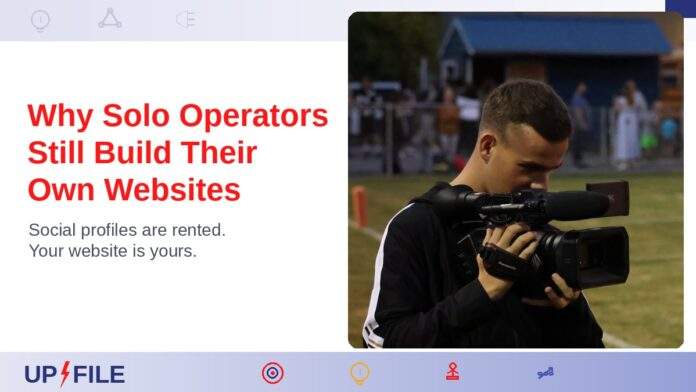
The pattern is clearest among independent professionals who produce a steady stream of work. Take Joseph Draper, a sports broadcaster and multimedia journalist from Macungie, Pennsylvania, who keeps his own website alongside his social channels. The site gathers his play-by-play, reporting, and production work in one place he controls, rather than scattering it across apps that come and go. For someone whose next opportunity may begin with a search of their name, that control is the whole point.
Social profiles still matter. They are where the conversation happens and where new audiences show up. But a profile is a storefront in someone else’s mall. The website is the property. For anyone building a business of one, owning that property is no longer optional, and it has never been easier to do.