spot_img
9.1 C
London
Home Blog Page 6

The rise of cryptocurrencies and blockchain technology

0

In recent years, the rise of cryptocurrencies and blockchain technology has been a hot topic in the world of finance and technology. The concept of digital currencies and decentralized ledger systems has taken the world by storm since the launch of Bitcoin in 2009, sparking a wave of innovation and disruption in the financial industry.

Bitcoin and other cryptocurrencies are digital assets that use cryptography and blockchain technology to create a secure, decentralized, and immutable system for tracking and transferring value. This technology enables the creation of a decentralized digital currency that is managed by a network of users rather than a central authority or government.

One of the key benefits of cryptocurrencies is that they provide a quick, efficient, and cost-effective means of transferring value around the world. tree in order to make a decision in the past. As a result, cryptocurrencies have become a popular choice for businesses and individuals looking to send money internationally, pay for goods and services online, or store value outside of traditional financial systems.

In recent years, blockchain technology, the underlying infrastructure for cryptocurrencies, has also seen significant growth and development. This technology enables the creation of a decentralized, distributed ledger capable of recording and verifying transactions in the absence of a centralized authority. This has sparked a wave of innovation in a variety of fields.

Advantages of Blockchain Technology

One of the key advantages of blockchain technology is its ability to provide a secure, transparent, and immutable record of transactions. This makes it well-suited for applications where trust and security are critical, such as in the financial industry. It also has the potential to improve efficiency and reduce costs in a wide range of industries, by streamlining processes and eliminating the need for intermediaries.

As the adoption of cryptocurrencies and blockchain technology continues to grow, it is clear that these innovative technologies are here to stay. They have the potential to reshape the way we think about money and value and to provide new opportunities for businesses and individuals around the world. Proponents believe that cryptocurrencies will revolutionize money creation and control by removing Wall Street and central banks from the equation.

The Potential Impact of Cryptocurrencies on the Future of Finance

It is clear, however, that institutional investors are better equipped to deal with digital assets than retail Crypto investors because they have access to sophisticated risk management tools and trading platforms. Clients of traditional financial institutions will continue pushing them to support digital assets, as we expect.

According to a survey that we conducted in the spring of 2022, three-quarters of financial service executives said they expected their companies to invest more in this area. They are most interested in digital assets as an exchange for value.

Centralized crypto finance companies, as well as some early-adopter traditional firms, such as BNY, Fidelity, US Bank, Mastercard, PayPal, and JP Morgan, have been active in this space. However, both traditional firms and large tech companies are losing talent to new crypto players because these new players offer a culture of innovation, the opportunity to fundamentally change the financial landscape, and the potential for personal wealth creation.

Challenges Behind this technology

Cryptocurrencies have also created new challenges for governments to deal with. Cryptocurrencies’ anonymity and portability make them appealing to bad actors such as criminal organizations, terrorist organizations, and rogue states. There are also concerns about how emerging financial technologies will be regulated. Furthermore, crypto mining can consume massive amounts of electricity, raising concerns about its environmental impact. 

The financial regulators are scrambling now to respond. There are many regulations in place around the globe. Some governments embrace cryptocurrencies while others ban or limit their use. The U.S. Federal Reserve is one of many central banks that are looking at introducing cryptocurrency.

The role of artificial intelligence in finance

Due to the availability of data and the affordability of computing power, artificial intelligence (AI) systems have seen a significant increase in adoption in finance. This trend is expected not to change. Some estimates predict that global spending on AI will double between 2020-24. It will grow from USD 50.1 billion by 2020 to USD 110 billion by 2024. (IDC, 2020) So the world of Artificial intelligence is growing rapidly and seems to have affected every sector and industry. Banking and finance are among the many sectors that have found ways to harness this revolutionary technology.

Importance of AI’s role in the Financial Industry

Financial AI can be used to increase efficiency by reducing friction costs, such as commissions and fees associated with transaction execution can be reduced and productivity levels improved, which leads to greater profitability. Automation and technology-enabled cost reduction allow for spending efficiency, capacity reallocation, and transparency in decision-making. Artificial intelligence (AI) applications in financial services providers can improve the quality and variety of financial products and services offered to consumers, enhance the tailoring and personalization of these products, and diversify the product range. AI can be used to unlock insights from data and inform investment strategies. 

Benefits of AI in Finance

Below are a few benefits of how AI is revolutionizing the finance systems in corporate life. 

  1. Enhanced data analysis and decision making

AI in finance has the ability to increase productivity at all levels. This is one of its most important benefits. AI features allow for faster data analysis and less time to produce statutory reports. AI technology merging into the finance sector increases employee productivity. Different processes won’t require hard work and can be completed using AI.

  1. Increased Annual Revenues

The use of AI in the enterprise is proving to be a huge financial win for companies. More than 30% of respondents claimed that AI has increased annual revenues by more than 10%, and that AI has reduced annual costs by more than 10%.

  1. Increased efficiency and productivity

Efficiency in AI in finance refers to optimizing operations through precise forecasting, predictive maintenance, and quality control. It also involves identifying inefficiencies and rectifying them. It improves productivity and preserves profit margins despite rising costs. It saves money.

  1. Risk assessment

Is artificial intelligence possible to determine if someone is eligible for a loan? Definitely. According to Towards Data Science, banks and mobile apps use machine learning algorithms to determine loan eligibility and provide personalized options. What’s the advantage? AI isn’t biased and can quickly determine loan eligibility more accurately and quickly.

  1. Fraud detection, management and prevention

Have you ever received a phone call from your credit card company after you’ve made several purchases? Thanks to artificial intelligence, fraud detection systems analyze a person’s buying behavior and trigger an alert if something seems out of the ordinary or contradicts your traditional spending patterns.

  1. Looking to keep up with the latest financial trends and advice

 Are you interested in a portfolio assessment? An artificial intelligence algorithm can analyze your portfolio and provide you with the most current trends and financial information.

  1. Personal banking/financial management

Chatbots, personal assistants, and virtual assistants have reduced (and sometimes eliminated) the need to wait on hold to speak with a customer service agent. Clients can now check their balance, make payments, review account activity, or ask questions to a virtual assistant. They also have the ability to get personalized banking advice when it’s most convenient.

  1. Making smart underwriting decisions

Built In claims that AI technology is helping banks and lenders make “smarter underwriting judgments” during the credit card and loan acceptance processes. It is possible to create a more accurate picture of people who might be underserved by using a variety of characteristics.

  1. Reducing false positives and human mistakes

Operator error is a common mistake that people make. 94% of IT professionals in the financial sector were unsure if their advisers, employees, or partners are capable of handling consumer data. Artificial intelligence is a great tool to reduce false positives and human errors.

  1.  Increase your ability to predict and appraise loan risk

Artificial intelligence uses customer spending patterns and other factors to predict loan borrowing behavior. This is particularly important in areas where people have access to the internet and mobile phones, but not traditional credit.


Forbes offers the following example: A borrower may download an app that the lender can use to assess the person’s digital footprint. This includes social media usage, bookmarks, and other information.

The Future of AI in Finance

Because AI is becoming increasingly prevalent across many industries, it’s no wonder that it’s taking off in the field of banking, especially now that COVID-19 transformed human contact. AI has made a huge impact by simplifying and combining tasks and processing information faster than humans.

Did Digital Newspapers Change the World of Information?

0

The internet has revolutionized the way that we consume information. We used to rely on newspapers for the most recent news.

We can now log on to our smartphones or laptops and instantly access digital newspapers all around the globe. How has the transition from paper to digital affected the newspaper industry?

Read on to find out how digital newspapers are changing our way of consuming information.

The History of Newspapers

Source: quintype.com

The history of newspapers goes back to the early 1600s when the first news pamphlets appeared in London. The earliest newspapers consisted of a collection of articles that were reprinted from other sources like flyers, handbills, and other printed material. These newspapers were often very partisan and often had unreliable content.

They became more reliable sources of information and news over time. The 1800s saw the advent of printing technology making it possible to mass-produce newspapers. Their popularity soared. In the United States alone, thousands of newspapers were in circulation by the middle of the 19th century.

In the late 19th century and early 20th century, newspaper publishing saw more innovations. These included halftone photographic printing and rotary printing presses. These innovations made it possible for newspapers to print color photos and illustrations, making them more visually appealing.

Digital newspapers have quickly replaced their print counterparts as the preferred source for news and information. Print newspapers have a loyal readership, but their readership is decreasing as more people use digital news sources to get their news.

Related: How to Delete Yourself From The Internet?

How Digital Newspapers Have Impacted The News Industry

Source: government.economictimes.indiatimes.com

Anyone can access news anywhere on the planet via an internet connection. As news organizations compete for eyeballs and clicks, this has led to increased competition.

Traditional print newspapers are now forced to adapt to their business models in order to survive. While many have launched digital versions of their publications while others shut down their doors completely, some have not.

Digital newspapers have also had an impact on how news is consumed. It is now easier for people to access news via social media and online than traditional print sources.

This shift in behavior led to changes in how news is reported. There’s now more emphasis on visuals and less analysis.

How do digital newspapers work?

Source: whatsnewinpublishing.com

They have revolutionized the way that people consume news. People used to wait for the paper to arrive at their door in the old days. People can now access news anywhere, anytime.

You can find them on many platforms including apps, websites, and e-readers. They offer more content than their print counterparts and are updated in real-time.

Digital newspapers also have a higher reader engagement. Digital newspapers allow readers to comment on articles and share them with their friends. They can even interact with journalists.

They are changing journalism. They are faster, more engaging, as well as more accessible than ever.

The Pros and Cons

The internet has revolutionized the way we access information. You can get your news from many sources. What are the pros and disadvantages of reading news online?

They are also more up-to-date than their printed counterparts. You can also interact with them by watching videos, listening to audio clips, and linking to related articles. By subscribing, you can tailor your news feed to suit your interests.

There are also negative aspects. Online ads can be intrusive, and paywalls can make access to all articles difficult. It’s easy to fall for clickbait if you don’t pay attention.

What’s the verdict? It’s up to each person to decide if digital newspapers are right for them. They have changed the information landscape forever, but there is no doubt about that.

Related Post: How to create an effective Instagram marketing strategy

Digital Newspapers: The Future

Digital newspapers are certain to continue growing in popularity as they become the preferred choice of many readers, thanks to the advancements in technology. These are just a few of the many ways digital newspapers will change over the next decade.

The use of artificial intelligence and machine learning is increasing

Source: nytimes.com

Digital newspapers will use machine learning and artificial intelligence to personalize content and provide more relevant recommendations.

Improved user experience:

They will keep focusing on providing a great user experience. This includes creating intuitive interfaces and using cutting-edge technologies to make digital newspapers as enjoyable as possible.

More emphasis on niche content

Many outlets will be focusing on niche content to appeal to specific audiences as they compete with digital newspapers. This could be anything from a detailed coverage of specific industries to articles of special interest on topics such as food, fashion, and travel.

Subscribe to more paid subscriptions

Although most digital newspapers offer their content free of charge, it is possible that more outlets will experiment with paid subscriptions. This could create a steady stream of revenue for publishers, and allow them to spend more on quality journalism.

Continued growth in developing countries:

These devices are becoming increasingly popular in developing countries where traditional media is less accessible. As more people have access to smartphones and other devices that connect to the internet, this trend will likely continue.

Conclusion

Digital newspapers have changed the information world in many ways. It has made news easier to access for people all over the world. It has also made news more accessible to everyone, allowing readers to comment on articles and join in the discussion.

They have also created a new generation of investigative journalists, who can use the internet to uncover stories that may never otherwise be published. Digital newspapers have had a positive effect in many ways on journalism and information.

How to Calculate Opportunity Cost?

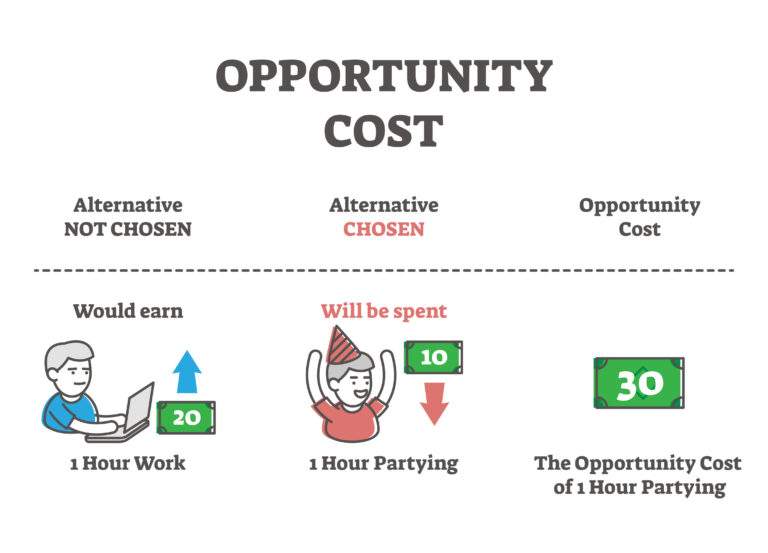
Opportunity cost is the difference between what you gain and what you lose by choosing between two or more options. You feel the decision you made will result in better outcomes regardless of what you may lose. Your investment decisions will have both immediate and future gains or losses.

Consider the following example: Sell an asset Now or Hold on to it to sell later. Although an investor may be able to get any immediate gains by selling the asset immediately, they will miss out on any future gains.

Another example of opportunity costs is choosing between staying home or working. How much are you losing if you choose one option over the other?

David Rewcastle explains that opportunity cost does not only apply to money or investments; it can also be applied to your life.

Read: 5 Tips For Beginners in Cryptocurrency Investing

How to Calculate the Opportunity Cost

Although opportunity cost isn’t an exact measure of it, it can be quantified by estimating the future potential value you didn’t receive and comparing it to the value you chose instead.

The following formula can be used to calculate the opportunity cost: 

Opportunity Cost = Return On Most Profitable Investment Choice – Return On Investment Pursued.

According to Darien Financial Analyst David Rewcastle, Opportunity cost is an idea that investors and economists love to study. What would have happened, for example, if Henry Ford hadn’t started mass-producing vehicles? You may not have heard of him, but he might have gone on and done something similar.

Rewcastle stated that opportunity cost is the proverbial “fork in the road”, with dollar signs marking each turn. The key is that there is something to lose and something to gain in every direction. Make an informed decision by estimating your losses.

Read: Create Your Company Financial Plan in 6 Steps

What does Opportunity Cost mean for you?

You may have difficulty understanding the concept. You can’t live in two places at the same time.

Explicit Costs

For investors, explicit expenses are out-of-pocket costs such as the purchase of stock options or spending money on a rental property. Other costs include wages, utilities, and materials.

Implicit Costs

Implicit costs do not represent a financial payment. These are not your direct costs, but the loss of income from your resources.

What is the significance of opportunity cost?

You can make better decisions by understanding the opportunity cost. You can make better decisions and be prepared for the consequences of your choices if you understand all of the possible costs and benefits.

5 Tips For Beginners in Cryptocurrency Investing

0

What information would you need about cryptocurrency and its risks? This article will provide all the information you need to safely enter the cryptocurrency market. In recent years, there has been an increase in people who are looking to diversify their portfolios through the purchase of cryptocurrency. The most popular ones are Bitcoin and Ethereum, but they’re not the only ones.

Let’s look at their history before we get into the details about cryptocurrency. Wei Dai, a computer specialist, created the first cryptocurrency system with his digital currency b-money in 1998. The new decentralized money was secured by encryption. Satoshi Nakamoto was later used to create the original Bitcoin protocol 2008 and the P2P digital currency system in 2008.

cryptocurrency is a digital currency that can be used to make online payments or store value. 

It is important to understand that cryptocurrency prices are determined solely by supply and demand. This makes them highly volatile and not suitable for conservative investors. Your risk profile can help you make better investment choices.

1. Use a reliable platform

You will need to use an exchange or contract for a different broker to convert fiat funds or trust funds into cryptocurrency. They should support cryptocurrency as an underlying asset

Exchanges offer a great deal of value for both novice and experienced traders, with features like cryptocurrency alerting.

You can set up automatic alerts to receive information about price movements for specific cryptocurrencies. This will allow you to make more informed and quicker investment decisions.

2. Find the right wallet

You’ll need a safe place to store your cryptocurrency once you have it. Your crypto wallet is a piece that manages the codes that allow you to access your cryptocurrency. You can have simple apps for your smartphone or more complex hardware that passes through paper and web wallets.

3. Do not spend more than you can afford to lose

You should invest in cryptocurrency the same way as you would any other type of asset. Don’t spend money that you won’t use immediately or in the near future so your standard of living is not affected by a market downturn. Do your research before making a decision. Also, remember that cryptocurrency is volatile and there are no guarantees.

4. Learn as much as you can

It is best to start investing in cryptocurrency by buying small amounts at first. You already know that Bitcoin is the most popular and widely studied cryptocurrency. There are many cryptocurrencies that you can choose from Cardano, Ethereum, Tether, and Ripple.

Many believe that Bitcoin is the best cryptocurrency to invest in. It’s also the most popular, secure, liquid, and valuable. Before you rush to make a decision, it’s important to understand blockchain technology and find out the reasons behind some of the most popular crypto projects.

Read: How to create wealth investing in real estate?

While it may seem obvious, it is important to be educated before investing in volatile cryptocurrencies. It’s important to be well-informed before investing in cryptocurrency. There are many potential downsides and upsides to this investment. You can learn the basics by reading articles from reliable websites and talking to traders. You should also consider investing in education if you are interested in becoming an expert in cryptocurrency or blockchain technology.

5. Take extreme care with security

Digital currencies are cryptocurrencies. Everything happens online. You must do all you can to protect your investment. You must first ensure that the crypto exchange platform is safe.

You will need to create a unique and complex password for all services that you use to store and manage your cryptocurrency.

Conclusion

One thing is certain about the cryptocurrency market: it will only grow. There are currently over 10,000 cryptocurrencies. Each one has its own advantages and disadvantages. Some of these cryptocurrencies could be the best investments.

Many people find market volatility unsettling and it makes it difficult for novice investors to make investment decisions. It is important to have the right tools and get the right education.

Create Your Company Financial Plan in 6 Steps

A financial plan differs from financial statements.

Instead of looking at the past, you project what will happen in the future, forecasting income and expenses. Projections can be used as an early warning system to help you plan for cash flow dips and identify financing requirements.

You can also use it to monitor your finances. This will allow you to quickly assess your progress and avoid any problems. These are the six steps you need to make your financial plan.

Read: Why 90% of startups fail and how to become profitable

1. Reexamine your strategic plan

Financial planning should begin with the company’s strategic plans. Consider what you want to achieve at the beginning of each year. Ask yourself these questions:

  • What do I need to expand?
  • Do I require more equipment?
  • Do I need more staff?
  • Are there other resources I can use?
  • What will my plan do to my cash flow?
  • Do I need financing? What amount?

Next, calculate the financial impact over the next 12 months, including spending on a major project.

Read: 9 important steps to create your business plan

2. Make financial projections

You can create monthly financial forecasts by recording sales forecasts and expected expenses for labor, supplies, overhead, etc. Now add the costs of the projects that you have identified in step 1.

You can either use simple spreadsheet software or other tools in your accounting program. Do not assume that sales will immediately convert to cash. You should only enter them as cash if you anticipate getting paid based on previous experience.

Prepare a projection of income (profit or loss) and a balance sheet projection. You can include multiple scenarios, including optimistic, pessimistic, and most likely. This will help you anticipate the impact of each scenario on your projections.

Your accountant may be able to help you with your cash flow projections. As your banker or investor will need financing, it is you who must discuss the plan with your accountant.

6 steps to create your company’s financial plan

3. Arrange to finance

Your financial projections can be used to calculate your financing requirements. Talk to your financial partners before you leave for work to discuss your options. Bankers will be more confident in their financial management if they have well-prepared projections.

4. Prepare for contingencies

What would you do in the event that your finances suddenly went downhill? It is a smart idea to have an emergency fund of money in case you are in need. There are two options: keep a large cash reserve and have lots of credit available.

5. Monitor

Compare your actual results to your projections throughout the year to determine if they are on track or need to be adjusted. Financial problems can be detected early on by monitoring.

6. Get help

Consider hiring an expert to assist you in putting together your financial plan if you are not a financial expert.

Get our free financial planning template and start creating your financial plan today.

Dominic Siwik: Exercise Science vs Kinesiology

0

Although many people mistakenly use the terms exercise science or kinesiology interchangeably with professionals in the field, they know there are significant differences. Students who are trying to decide which field to pursue in order to prepare for a career in exercise science or kinesiology will need to be able to clearly understand the differences.

Kinesiology covers a wide range of topics that study movement, function, performance, and how it affects overall health. Kinesiology’s sub-field Exercise Science focuses on exercise adaptation and human response. It also focuses on the mechanisms that influence exercise.

Kinesiology Specializations

Exercise science major Dominic Siwik explains that kinesiology can be considered an interdisciplinary field with many sub-specialties. Biomechanics and sociocultural foundations of sport are the theoretical bases for this field. Other sub-fields of exercise science include:

  • Training in the gym
  • Management of sports
  • Training for teachers in physical education
  • Sport medicine

Applying Kinesiology to Work Settings

Dominic Siwik states that kinesiologists can work in many fields, including fitness, sports, and therapeutics. You can also choose to be a wellness consultant, an instructor in various sports, a physical education teacher, or a fitness specialist. You will be responsible for assessing injuries, developing rehabilitation programs, and conducting fitness assessments.

Exercise Science Specializations

A degree in exercise science will lead to the most popular job: a healthcare worker. This is if you have passed the Exercise Physiologist Certified exam, which the American Society of Exercise Physiologists administers. Many have also completed a university degree. They can assess a person’s fitness level and create customized workout plans. These people work in hospitals, businesses, gyms, health clubs, and military, and athletic programs. Through 2022, job growth is expected to be nine percent.

Read: What is a Neurologist?

Exercise Science Applications

According to Dominic Siwik exercise science, majors are trained to improve health and fitness. They may create custom programs for clients, train them for marathons, or help with injury recovery. The body’s response to exercise is important for overall health. Clients are closely consulted by exercise science majors to create fitness programs that promote or maintain good health.

What type of education is required?

To work as a kinesiologist, you need to have a bachelor’s degree, master’s degree, or doctorate. A doctorate is required for clinical research and other specialized areas. A bachelor’s degree in exercise science, physiology, or a related field is required for most positions in this area. A physical therapy doctorate program will require students to study kinesiology if they want to work with patients in rehabilitation.

Both programs are for students who are interested in health and wellness and wish to share their knowledge with others. Students who are interested in health and wellness careers have many options. It is important to decide which career path you want to follow, whether you are interested in exercise science or kinesiology.

What Is Creative Thinking and Why Does It Matter?

Creative thinking is the ability to think differently about something. Employers across all industries seek employees who are creative and can bring new perspectives to their workplace.

Creative thinking can include:

  • A new way to approach a problem
  • How to resolve a conflict between employees
  • A new result from a set of data
  • An untested approach to earning revenue
  • A new product or product feature

Learn more about creative thinking and how it can be beneficial for your career.

Read: What Is Construction Project Management?

What is Thinking Creatively?

Thinking outside the box is part of being creative. Creative thinking is often about lateral thinking. This is when you are able to see patterns in a way that is not obvious.

Creative thinking could be defined as the ability to think creatively and find new ways to accomplish tasks, solve problems, or meet challenges. This means that you bring a new perspective to your work, even if it is not conventional. This approach can make departments and organizations more productive.

How it Works

There are many opportunities for creativity in the workplace, from highly technical positions to obvious artistic ones. Anything that leads to an “aha” moment in the workplace is generally considered creative. These are just a few examples of thinking creatively that you can use in different job roles.

  • Artistic Creativity
  • Creative Problem Solving
  • STEM Creativity

The benefits of thinking outside the box

Employers value creative thinkers for their bottom line. Companies that encourage creativity can see higher revenue growth. You can be more attractive as a leader or job candidate if you are a creative thinker.

Read: Which final deliverables should project managers be responsible for?

How to showcase your creative thinking skills

Consider how your creativity has been helpful to you in the past, and how that might help you when you apply for the job.

You can find fulfillment in unexpected places if you are looking for creative work opportunities to fulfill your personal needs. You will feel creative if you can put your own stamp on your work.

Read: 9 important steps to create your business plan

Kenneth Watterworth is a business owner from Westport, CT. Visit his official website to learn more about Ken Watterworth Westport.

What is Construction Project Management?

Avoiding costly errors is a priority when millions of dollars are at stake in a construction project. You must consider every possibility and detail when you are working within tight deadlines and financial constraints.

You can do this whether you are constructing oil and gas refineries or power plants, or managing infrastructure projects. Construction project management can help you manage the construction process efficiently and keep it on track, from planning and design to resource management and budget allocation.

construction project management

What Is Construction Project Management?

Project managers are responsible for the entire process, communicating with the management. Construction planning plays an important role. A well-planned strategy and plan can help overcome overheads, reduce budgets, deliver on time, and maintain quality standards.

Read: Which final deliverables should project managers be responsible for?

What skills are important in construction project management?

A construction project manager needs to have a particular set of skills. They need to be able to adapt to any changes and manage a number of different aspects of their project. Some of the following skills are important in a project management contractor:

  • Industry Knowledge
  • Openness to Feedback
  • Micromanagement Avoidance
  • Technological Affinity
  • Negotiation
  • Financial Management
  • Risk Management 
  • Organization
  • Flexible Planning
  • Communication

What does a construction project manager do?

As the job involves important responsibilities, being a construction project manager requires many skills. It is the responsibility of business owners to find qualified candidates and to train them in these skills as construction projects become more complex and larger.

Other construction project management responsibilities include:

  • As the client’s point of contact throughout the project, I will be there to answer any questions.
  • See more information about obtaining permits or design evaluations
  • Assist in managing the labor schedule of each project and matching the talent to the task.
  • Change orders
  • To ensure that the project is practical, work with the architect/construction crew.
  • On-site meeting with the architect, client, and construction crew
  • Negotiate with suppliers, vendors, and subcontractors
  • Send project estimates to clients.

What are some project management concepts?

The process groups are initiating, planning, and executing, as well as monitoring and controlling, and closing. Knowledge areas include integration and scope, time cost quality, communication, risk management, procurement, stakeholder management, as well as communication.

Read: 9 important steps to create your business plan

How to become a construction project manager? 

The requirements for the first include a minimum of 4500 hours of experience and a 4-year degree ( approximately two-and-a-half years in a full-time job), as well as required education in project management.

To build a career in construction project management, you need both education as well as experience. Many people enter the field after graduating from college with a bachelor’s in construction science, management, architecture, engineering, or another related subject.

A project manager with the right qualifications has the personality, skills, and experience to succeed in the job. At least three years of experience in a similar role, the ability to communicate, formal training, and a PMP certificate are some of the requirements.

Helpful Features of a Product Will Help Sell Itself

It is important to distinguish between benefits from features when developing and marketing products or services. Features refer to the characteristics of your product or service. Some ovens have features like self-cleaning, smooth stovetops, and warming bins. Let’s discuss how to let your customers know the helpful features of a product.

Benefits are the reasons customers purchase the product or service. Some ovens have benefits such as safety, ease of use, affordability, and, in the case of stainless steel ovens, prestige.

Read: Why 90% of startups fail and how to become profitable

Services are just like products. They have distinct features and benefits. However, these differences might not be obvious to potential customers. One contractor might use master painters, while another may employ laborers to paint. Both can tell you that they paint, but one is a master painter and the other produces better-looking paint jobs (a distinct advantage).

Each product and service has a purpose. An oven’s purpose is to bake raw foods. However, not all ovens offer the same benefits and features.

Uniqueness can make a product or service stand out from the rest. The capabilities of a product and service can be communicated through features. Customers will only value features if they are valued. Customers should see the benefits of your products and services as valuable. You can increase sales and profits by highlighting the benefits of your products and services in your marketing and sales efforts.

Customers buy products and services to solve a problem. Your customers will ask the question “What’s in It for Me?” Consciously and unconsciously, they will be asking this question all the time. If your product or service offerings are to be successful, they must provide solutions and satisfy their needs.

Benefits are more important than features for your customers. It is crucial that you fully understand the benefits of your products and services, highlight these benefits in your sales efforts and keep your products and/or services current when additional benefits are required by your customers.

Take a look at how auto manufacturers market their vehicles. Minivan manufacturers don’t stress the vehicle’s layout or carrying capacity when trying to sell them minivans. They display images of happy families loading their children, toys, and sports equipment into their minivans. They highlight the benefits of the vehicle’s features more than the features.

Read: Which final deliverables should project managers be responsible for?

Examples of benefits that go beyond features.

  • Hosting solutions for medium-sized businesses can be offered by a vendor of Web site shopping carts. They will emphasize the ease and time savings that come with not having to maintain a website. It is selling convenience, not software.
  • If a carpet company could show how its carpets can be used to decorate interiors, it might be more successful. Pictures of rooms that are beautiful could be more helpful features of a product than a pile of carpet samples and a list of all the fabric features. It is selling beauty, not carpets.
  • An advertising company may focus its marketing efforts on its end product, which could be improved performance or increased profits. Not its consulting methods. It is selling profitability and not consulting.
  • The manufacturer of computer printers may emphasize simplicity and less time than reliability or quality. It is selling ease-of-use, not printers, but quality.
  • Salmon fisheries might highlight the health benefits of salmon. It is selling health, and not fish.

Read: How to write a standout Executive Summary

What are the most important features?

Because they give your customers clues about the benefits of your product or service, features are always important. While benefits are more important than features, there will be times when features are crucial.

  • A unique feature can give you a competitive edge if all products in a product category offer the same basic benefits. The bass booster was the best-selling product in a category where all boom boxes could play tapes and CDs. However, it provided a significant benefit for the consumer. Another example is that online diagnostic tools were developed by leadership consultants who all referred to similar results in performance improvement.
  • Consumers can easily compare products or services to find the best deals. This is possible thanks to the Internet. Although most cell phones offer the same benefits for communication, consumers may choose to not buy a particular model if it lacks a feature that is available on a rival’s phone. Consumers may decide to buy the phone with Bluetooth connectivity if it has this feature and not the one without. It is not important that Bluetooth connectivity is available, but it is easy to compare feature sets.

Conclusion

Locating the customer’s pain points and how your product helps to fix the will translate the helpful features of a product.